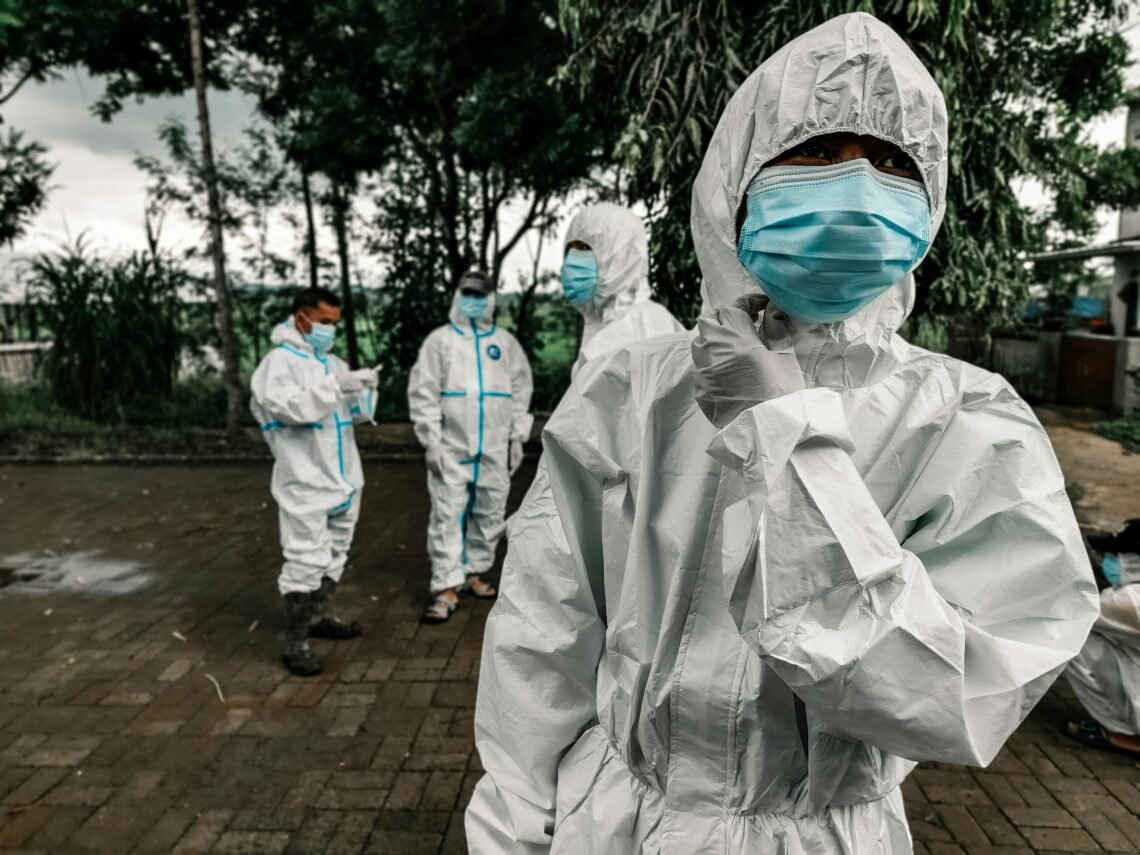
When COVID-19 first emerged, one of the questions many people naturally asked was whether warmer weather would slow the spread of the virus.
It was an understandable hope. Many respiratory viruses show seasonal patterns, and some viruses are less stable under certain environmental conditions. So, during the early months of the COVID-19 pandemic, researchers were actively studying whether temperature and humidity might influence the transmission of SARS-CoV-2.
But there was an important distinction between “warm weather might influence transmission” and “hot weather will kill the virus.”
The latter was never established.
Today, we have much more information about SARS-CoV-2 than we did when this article was originally written. WHO states that there is no conclusive evidence that weather or climate has a strong enough influence on transmission to prevent COVID-19, and SARS-CoV-2 has circulated in both hot and cold environments.
So, let’s revisit this topic and look at what we learned.
Naming COVID-19 and the Virus That Causes It
When the outbreak began, the virus was widely referred to as the 2019 novel coronavirus, while the disease itself was sometimes simply called “the coronavirus.”
The World Health Organization eventually established the official names:
Disease: Coronavirus disease (COVID-19)
Virus: Severe acute respiratory syndrome coronavirus 2 (SARS-CoV-2)
These are two different terms: SARS-CoV-2 is the virus, while COVID-19 is the disease caused by the virus.
Incubation Period
An incubation period is the time between being exposed to an infectious organism and developing symptoms.
Early in the pandemic, estimates commonly placed the average incubation period of COVID-19 at around five days, with symptoms potentially developing within approximately 2–14 days. Those early estimates were useful during the initial outbreak, although incubation periods can vary depending on the SARS-CoV-2 variant and other factors.
Because this article was originally written during the early pandemic, the original figures should be viewed as historical information rather than current clinical guidance.
Is COVID-19 Sensitive to Hot Temperatures?
Early in 2020, there was considerable speculation that warmer weather might reduce COVID-19 transmission.
At the time, researchers were investigating whether SARS-CoV-2 might behave similarly to some other respiratory viruses, including seasonal influenza and viruses responsible for the common cold.
It was reasonable to investigate.
However, it was not reasonable to assume that summer would simply make COVID-19 disappear.
The World Health Organization explicitly warned that people could catch COVID-19 regardless of whether the weather was hot, cold, sunny, or humid. Countries with hot and humid climates experienced COVID-19 transmission as well.
WHO later summarized the evidence by stating that there was no conclusive evidence that weather or climate had a strong influence on SARS-CoV-2 transmission.

What About Humidity and Temperature?
There is an important scientific distinction here.
Temperature and humidity can affect how long viruses remain viable under particular environmental or laboratory conditions. WHO materials note that environmental factors such as temperature, humidity, and sunlight can influence viral stability outside the body.
However, that does not mean that raising the temperature of a room, going outside on a hot day, or living in a tropical country will prevent people from becoming infected.
Human behavior and the environment in which transmission occurs also matter greatly.
Crowding, indoor ventilation, close contact, and other factors can be much more important for transmission than outdoor temperature alone.
In other words:
A hot day does not make a gathering automatically safe.
Early Research During the Pandemic
During the first months of the pandemic, researchers around the world began examining whether temperature and humidity were related to COVID-19 transmission.
One early preprint from researchers in China examined reported COVID-19 cases and environmental temperatures and attempted to identify whether there was a temperature range associated with transmission.
At that time, the research was preliminary and had not yet undergone normal peer review.
This is an important lesson when looking back at pandemic information: early research can be useful, but preliminary findings should not be treated as established scientific fact.
As more studies accumulated, the picture became more complicated.
Rather than finding that warm weather would stop COVID-19, researchers found that weather alone could not explain transmission patterns.

Why Did Some People Expect COVID-19 to Decline in Summer?
There were several reasons behind this expectation.
First, some respiratory viruses have pronounced seasonal patterns.
Second, laboratory studies can show that environmental conditions influence how long viruses remain viable outside the body.
Third, people may spend more time outdoors during warmer weather, where ventilation is generally better than in enclosed indoor spaces.
These factors can influence transmission.
But they are very different from saying:
“Heat kills COVID-19.”
That’s simply too simplistic.
COVID-19 Can Spread in Hot and Humid Places
This became one of the clearest lessons from the pandemic.
COVID-19 spread in countries with very different climates, including countries that experience extremely hot weather.
WHO’s public-health guidance explicitly stated that COVID-19 can spread in hot and humid climates.
Therefore, living somewhere like the UAE, the Philippines, Singapore, or another warm region does not mean that a person is protected from COVID-19.
Likewise, cold weather does not automatically cause COVID-19.
The virus spreads primarily through infected people and respiratory particles, particularly in close-contact and poorly ventilated settings.
What About Taking a Very Hot Bath?
This was another misconception that circulated during the early pandemic.
Some people believed that raising the body’s temperature through a very hot bath or shower could destroy the virus.
It cannot.
Your body’s internal temperature is tightly regulated and does not rise to the temperature of the water around you.
A very hot bath can actually burn your skin or cause other heat-related problems.
WHO specifically warned that exposure to hot temperatures or sunlight does not protect people from COVID-19.
So, enjoy a warm bath if it helps you relax.
But don’t treat it as a COVID-19 prevention method.
So, Does Summer Help at All?
This question needs a more nuanced answer.
Weather may have some influence on viral stability and transmission behavior. WHO research materials acknowledge that temperature and humidity can affect viral survival under certain environmental conditions.
However, this influence isn’t strong or predictable enough to rely on temperature as a protection strategy.
In fact, WHO has noted that SARS-CoV-2 has no established fixed seasonality and can circulate throughout the year at varying intensities.
This is why public-health measures and individual precautions remain important regardless of the season.
What Really Helps Reduce the Risk?
Rather than relying on the weather, focus on measures that are actually known to reduce the risk of respiratory-virus transmission.
These include:
Good hand hygiene: Wash your hands with soap and water or use an appropriate alcohol-based hand rub.
Better ventilation: Fresh outdoor air and well-ventilated indoor spaces can reduce the concentration of infectious respiratory particles.
Avoiding close contact when sick: If you’re experiencing respiratory symptoms, staying home when possible and avoiding close contact with others can help reduce transmission.
Masks when appropriate: In higher-risk situations, wearing a well-fitting mask can provide additional protection.
Vaccination: Staying up to date with COVID-19 vaccination according to current recommendations can reduce the risk of severe disease.
The exact precautions appropriate for you depend on your health, local transmission levels, and current public-health recommendations.
Don’t Rely on Temperature Alone
Looking back at the early pandemic, one of the biggest lessons is how quickly assumptions can become misinformation.
At the beginning, scientists simply didn’t know enough about SARS-CoV-2 to predict exactly how the virus would behave throughout the seasons.
It was therefore understandable that people hoped warmer weather would help.
But hope isn’t the same as evidence.
As the evidence accumulated, it became clear that temperature alone wasn’t going to stop the pandemic.
Today, we know SARS-CoV-2 can circulate in different climates and throughout the year.

Final Thoughts
When this article was originally written, the world was desperately looking for good news.
Many of us were wondering:
Will summer end the pandemic?
Will the heat kill the virus?
Will everything return to normal when temperatures rise?
Unfortunately, the answer was not that simple.
Weather may influence viral stability and human behavior, but hot weather is not a reliable way to prevent COVID-19. SARS-CoV-2 has demonstrated that it can spread in hot, humid, cold, and dry environments.
“Hope is important because it can make the present moment less difficult to bear.”
— Thich Nhat Hanh
“For God gave us a spirit not of fear but of power and love and self-control.”
— 2 Timothy 1:7
During uncertain times, it is natural to look for simple answers.
Sometimes we want to believe that one thing, a warmer summer, a hot bath, a certain food, or a home remedy, can solve a complicated problem.
But health doesn’t always work that way.
The safest approach is to follow the evidence, listen to qualified health professionals, and avoid relying on unproven claims.
And perhaps that’s the biggest lesson from this article:
Don’t wait for the weather to protect you. Take sensible steps to protect yourself.
The sun can warm us.
Summer can lift our spirits.
But neither one is a cure for COVID-19. ❤️
Sources
- https://www.who.int/news-room/questions-and-answers/item/coronavirus-disease-covid-19-climate-change
- https://www.who.int/emergencies/diseases/novel-coronavirus-2019/advice-for-public/myth-busters
- https://iris.who.int/bitstream/handle/10665/368165/9789289060066-eng.pdf
- https://www.who.int/docs/default-source/coronaviruse/situation-reports/20240715_covid-19_epi_update_169.pdf
- https://apps.who.int/gb/mspi/pdf_files/2024/12/Item1_19-12.pdf
- https://www.who.int/emergencies/diseases/novel-coronavirus-2019/technical-guidance/naming-the-coronavirus-disease-(covid-2019)-and-the-virus-that-causes-it
- https://www.cdc.gov/covid/
- https://www.health.harvard.edu/diseases-and-conditions/coronavirus-and-covid-19
- https://www.medrxiv.org/content/10.1101/2020.02.22.20025791v1
What You Need to Know About Coronavirus (COVID-19)
27 Surprising Health Benefits Of Garlic
10 Evidence-Based Reasons to Consider Drinking Green Tea
Originally Published: March 10, 2020
Updated: August 2026




Your posts are so helpful, I love them. Before I couldn’t leave comments due some disqus issues, hopefully now you will know I am a regular visitor of your blog. Thank you so much for this insightful post.
Nilakshi – merakimusings
Hello there Nilakshi! You would always hear from me too from now on! Thank you for your appreciation, hope this article helps to bring you awareness with regards of our current situation. Take care!
This really concerns me. The whole world is suffering. God knows when it’ll stop. There are some precautions but very tough to maintain at least for those who use public transport.
That’s true! It is indeed terrifying. Who knows what will happen in the future. Hope it subsides and stop spreading soon. Stay safe always.
Chibi Mikhael is bread cheeks,very fucking cute cinnamon roll