
Being bitten or scratched by an animal can be frightening, especially when the skin is broken. Some wounds are minor and heal on their own, while others may require medical treatment, stitches, antibiotics, tetanus vaccination, or rabies post-exposure prophylaxis (PEP).
Rabies is one of the most serious concerns following certain animal bites. The good news is that rabies is preventable when appropriate treatment is started promptly after exposure. Immediate and thorough wound washing, followed by professional assessment for rabies PEP when necessary, can save lives.
In this article, we’ll discuss what to do after an animal bite, when to seek medical attention, how rabies is prevented, and what complications you should watch for.
Important: This article is for general information and first-aid education. If you have been bitten or scratched by an animal, especially a stray, wild, or potentially rabid animal, seek medical advice promptly rather than relying on home treatment alone.
What Is Rabies?
Rabies, caused by the rabies virus, is a serious viral disease that affects the central nervous system. Once clinical symptoms appear, rabies is almost invariably fatal. However, prompt post-exposure treatment can prevent the disease from developing.
Rabies can affect mammals, including dogs, cats, livestock, bats, and various wild animals.
Although rabies can be transmitted by several animal species, dogs are responsible for up to 99% of human rabies cases worldwide.
Key Facts About Rabies
According to the World Health Organization (WHO):
- Rabies is a vaccine-preventable viral disease found in more than 150 countries and territories.
- Dogs are the main source of human rabies transmission, accounting for up to 99% of human cases.
- Rabies causes tens of thousands of deaths every year, mainly in Asia and Africa.
- Children are particularly vulnerable; around 40% of people bitten by suspected rabid animals are children under 15.
- Immediate and thorough wound washing with soap and water after exposure is essential.
- Rabies deaths can be prevented through timely post-exposure prophylaxis (PEP).
- WHO and its partners are working toward the goal of zero human deaths from dog-mediated rabies by 2030.
First Aid After an Animal Bite
If you are bitten by a dog or another animal, take care of the wound immediately.
The most important first-aid measure is thorough wound washing. WHO recommends washing and flushing the wound with soap and running water for at least 15 minutes.
What to do:
1. Wash the wound thoroughly.
Immediately wash the wound with soap and plenty of running water for at least 15 minutes. This helps remove dirt, bacteria, and potentially infectious material from the wound.

2. Control bleeding.
If the wound is bleeding, apply gentle but firm pressure using sterile gauze or a clean cloth.
If the bleeding is severe or cannot be controlled, seek emergency medical attention.
3. Clean and protect the wound.
After thorough washing, seek medical advice. A healthcare professional can determine whether additional wound treatment, antibiotics, tetanus vaccination, or rabies PEP is necessary.
4. Do not ignore even a small bite or scratch.
A wound may appear minor but can still become infected or represent a possible rabies exposure.
5. Avoid harmful substances.
Do not apply irritants such as chili powder, plant juices, acids, or other potentially harmful substances to the wound.
When Should You Seek Immediate Medical Attention?
Whether the dog belongs to you or someone else, being bitten can be frightening. If the skin has been broken, it is important to consider professional medical assessment, particularly when rabies or infection is a possibility.
Seek prompt medical care if:
- The bite was from a stray, wild, or potentially rabid animal.
- The animal is behaving unusually or appears sick.
- The animal’s rabies vaccination status is unknown or not up to date.
- The bite has broken the skin.
- The wound is deep or punctured.
- The bite is on the face, head, neck, hands, feet, or near a joint.
- The wound has caused significant tissue damage.
- You have difficulty moving a finger, hand, arm, leg, or another affected body part.
- You notice increasing redness, swelling, warmth, pain, pus, or other signs of infection.
- You develop fever, weakness, dizziness, or feel faint.
- You are taking medications that affect blood clotting.
- You have a medical condition that increases your risk of infection.
- You are unsure whether you are adequately protected against tetanus.
- The bite occurred after a serious injury or accident.
Children who have been bitten should be evaluated carefully, particularly when the bite is deep, located on the face or hands, or involves a potentially rabid animal.
What about bats?
Bat exposures deserve special attention because a bite or scratch may be very small and sometimes may not be obvious.
If you have had direct contact with a bat, or you were sleeping and later discovered a bat in the room, seek medical advice about rabies exposure even if you don’t remember being bitten.

What Does WHO Recommend for Rabies Post-Exposure Prophylaxis?
The WHO recommends post-exposure prophylaxis (PEP) based on the type of contact with the suspected rabid animal.
| Category | Type of exposure | General PEP recommendation |
|---|---|---|
| Category I | Touching or feeding animals, or an animal licking intact skin | No rabies PEP is generally required |
| Category II | Nibbling of uncovered skin, minor scratches or abrasions without bleeding | Immediate wound washing and rabies vaccination |
| Category III | Bites or scratches that penetrate the skin, saliva contacting broken skin or mucous membranes, or direct contact with bats | Immediate wound washing, rabies vaccination, and rabies immunoglobulin or monoclonal antibodies when indicated |
The exact PEP schedule depends on factors such as the type of exposure, vaccination history, local guidelines, and whether vaccination is given intradermally or intramuscularly. Therefore, a healthcare professional or local public health authority should determine the appropriate regimen rather than relying on a fixed number of injections.
What Should You Do With the Dog?
If it can be done safely, gather as much information as possible about the animal.
- Put distance between yourself and the dog to prevent another bite.
- If there is no longer an immediate threat, determine whether the dog has been vaccinated against rabies.
- If the dog belongs to someone, ask for the owner’s name and contact information.
- Ask for the dog’s vaccination history and veterinarian’s contact information, if available.
- If possible, provide information about the animal to healthcare professionals or local public health authorities.
- Do not attempt to capture or handle a dangerous or unfamiliar animal yourself.
In some circumstances, a healthy dog that has bitten someone may be placed under veterinary/public-health observation for 10 days. This should be coordinated with the appropriate local authorities.
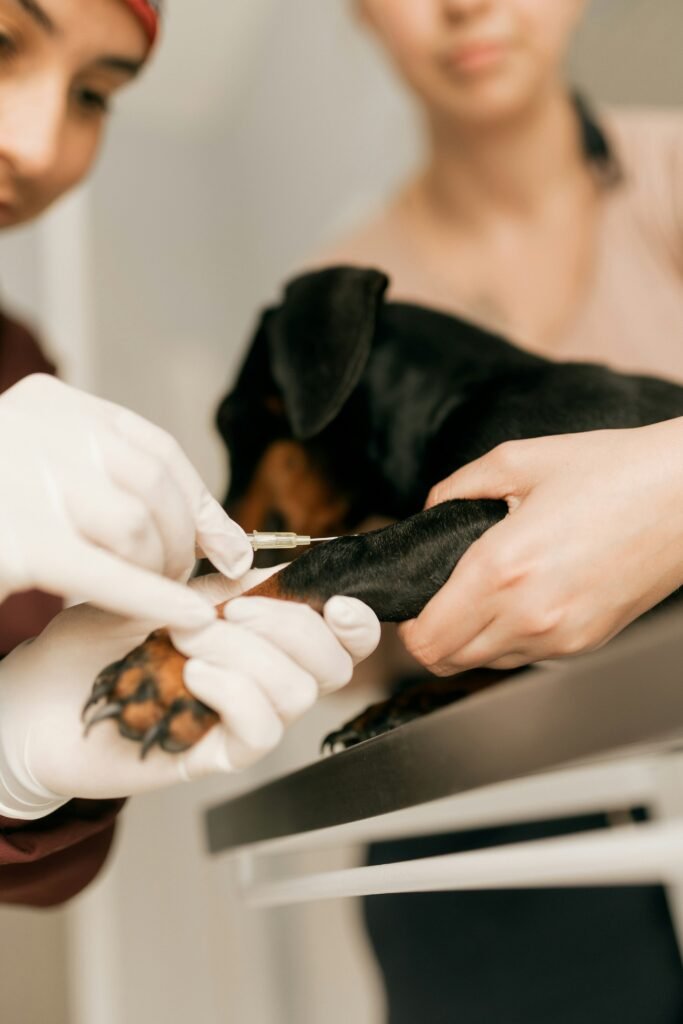
What Are the Possible Complications of a Dog Bite?
Dog bites can cause several complications, including infection, tissue damage, tetanus, and rabies.
1. Infection
A dog’s mouth can contain bacteria that may cause infection, including species of Staphylococcus, Pasteurella, and Capnocytophaga.
The risk of infection may be higher in people with certain medical conditions or weakened immune systems.
2. Nerve, Blood Vessel, and Muscle Damage
Even a small-looking puncture wound can damage underlying nerves, blood vessels, muscles, or tendons.
3. Bone Injury
A bite from a large or powerful dog can cause fractures or other bone injuries, particularly around the hands, feet, arms, and legs.
Seek urgent medical attention if you suspect a broken bone.
4. Tetanus
Animal bites can also raise concerns about tetanus. Your healthcare professional can determine whether you need a tetanus-containing vaccine based on your vaccination history and the type of wound.
5. Scarring
Dog bites can leave scars, particularly when the wound is deep or involves significant tissue damage. Scars may gradually fade, while more noticeable scars may sometimes require specialist treatment.
6. Rabies
Rabies is the most serious potential complication. Fortunately, rabies can be prevented after exposure when appropriate PEP is started promptly. Once clinical symptoms develop, however, the disease is almost invariably fatal.

When Can Rabies Become Fatal?
According to WHO, the incubation period for rabies is typically 2–3 months, although it can range from about one week to one year depending on factors such as the location of the exposure and the amount of virus involved.
Early symptoms may include fever, pain, and unusual or unexplained sensations such as tingling, prickling, or burning at the wound site.
As the virus reaches the central nervous system, progressive inflammation of the brain and spinal cord develops.
There are two major clinical forms:
1. Furious rabies
This form may cause hyperactivity, agitation, confusion, hallucinations, hydrophobia (fear of water), and sometimes aerophobia (fear of air or drafts).
The disease progresses rapidly and can result in death.
2. Paralytic rabies
This form is less dramatic but gradually causes muscle weakness and paralysis, beginning around the site of the exposure in some cases. A coma can eventually develop, followed by death.
The important message is that you should never wait for symptoms to appear after a potentially risky rabies exposure. PEP needs to be considered before symptoms develop.

How Is Rabies Diagnosed?
Rabies can be difficult to diagnose before clinical symptoms appear. There is no simple routine test that can reliably rule out rabies immediately after an exposure.
Once symptoms develop, specialized laboratory testing may be used to confirm the diagnosis.
This is another reason why prevention and timely post-exposure treatment are so important. Waiting for symptoms before seeking help can be life-threatening.
How Can Animal Bites Be Prevented?
Many animal bites can be prevented by learning how to interact safely with animals.
- Always supervise young children around dogs and other animals.
- Teach children not to tease, hit, chase, or disturb animals.
- Avoid approaching unfamiliar, stray, or wild animals.
- Never disturb a dog while it is eating, sleeping, or caring for puppies.
- Avoid aggressive or rough play with dogs.
- Keep household dogs properly vaccinated against rabies.
- Follow local recommendations for responsible pet ownership.
- People in certain high-risk occupations or travelers visiting rabies-endemic areas may benefit from pre-exposure rabies vaccination.
Final Thoughts
A dog bite can be frightening, but knowing what to do can make a significant difference.
The most important steps are simple: wash the wound thoroughly with soap and running water for at least 15 minutes, control any bleeding, and seek appropriate medical advice, especially if the animal is stray, wild, unavailable for observation, behaving unusually, or may not be vaccinated against rabies.
Never assume that a small scratch or seemingly harmless bite is automatically safe. When rabies is a possibility, early action is far better than waiting for symptoms to appear.
And remember that prevention starts with responsible pet ownership, proper vaccination, and teaching children how to interact safely with animals.
“Prevention is better than cure.”
Sometimes, the simplest precautions, washing a wound, getting the right medical advice, keeping pets vaccinated, and teaching children to respect animals, can prevent a serious problem before it begins.
“The prudent see danger and take refuge, but the simple keep going and pay the penalty.”
— Proverbs 22:3
Final Thoughts
An unexpected animal bite can leave us frightened and unsure of what to do next. But fear should not stop us from taking action. Stay calm, clean the wound immediately, and seek professional advice when necessary.
Taking care of ourselves also means knowing when something is beyond home first aid. A little knowledge, combined with timely action, can protect a life.
Sources
- World Health Organization (WHO) — Rabies and animal-bite prevention and treatment.
- WHO — Rabies post-exposure prophylaxis recommendations.
- WHO — Human rabies prevention and management.
Originally Published: February 6, 2020
Updated: August 2026
First Aid Guide: Nosebleeds
Vitamin Supplements: Which Ones Do You Really Need?
21 Natural Ways to Help Lower Blood Pressure and Support Heart Health



One comment on “Dog Bites and Rabies: First Aid, Treatment, and Prevention”