My Finnish Language Journey — Part 5B
When I first started learning Finnish in 2023, I knew it wasn’t going to be easy.
What I didn’t realize was just how different it would feel from the languages I had already been exposed to.
I grew up speaking Tagalog.
I had used English throughout school, work, and almost ten years of living in Dubai.
I had worked with people from many different countries and heard Arabic, Hindi, Urdu, Nepali, and other languages around me almost every day.
But Finnish?
Finnish was completely new territory.
I had never studied it.
I didn’t have Finnish-speaking friends.
I wasn’t surrounded by Finnish television, Finnish signs, or Finnish conversations.
In fact, if you had told the younger version of me that one day I would be sitting somewhere memorizing Finnish grammar, I probably would have asked:
Finnish? Why?!
😂
As I shared in the beginning of this series, Finland wasn’t even part of our original migration plan. My husband and I had once imagined places like Canada, Australia, the UK, the US, or New Zealand.
Moving to Finland: Why It Wasn’t Part of Our Original Plan
Then life led us somewhere completely different.
Finland.
And with Finland came something I had never expected:
I needed to learn Finnish.
You can read how this language journey started in:
Learning Finnish: The Beginning of My Language Journey Read the main Finnish Language Journey article
and:
How I Started Learning Finnish While Working Full-Time in Dubai Read Part 5A
But in this post, I want to talk about the other side of the story:
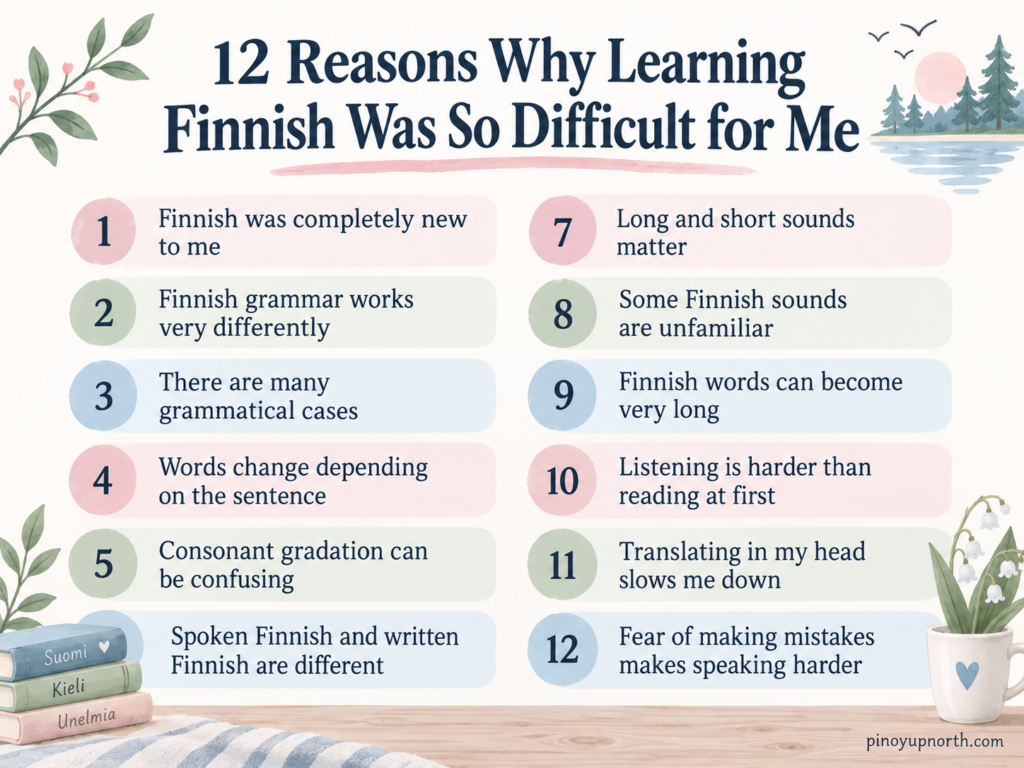
Why was Finnish so difficult for me?
There wasn’t just one reason.
There were many. 😅
A little note: This is my personal experience as someone who grew up speaking Tagalog and using English regularly. I’m not saying Finnish is equally difficult for everyone. Different learners come from different language backgrounds, and something that was difficult for me might be easier for someone else.
1. Finnish Was Completely New to Me
This was probably the most obvious reason.
I had no background in Finnish at all.
Before our Finland opportunity came along, I had never thought:
“Maybe I should learn Finnish someday.”
😂
I didn’t grow up hearing it.
I didn’t study it at school.
I didn’t use it at work.
I barely knew anything about how the language worked.
And suddenly, I wasn’t learning it just for fun.
It had become connected to a possible move, a new job, and our family’s future.
Learning a language you intentionally choose as a hobby is already challenging.
Learning a completely unfamiliar language because your life may soon depend on being able to communicate in it?
That added another level of pressure.

2. Finnish Grammar Worked Very Differently From What I Was Used To
This was when I began thinking:
Okay, Finnish… what are you doing?
😂
In English, we often use separate words such as:
in
from
to
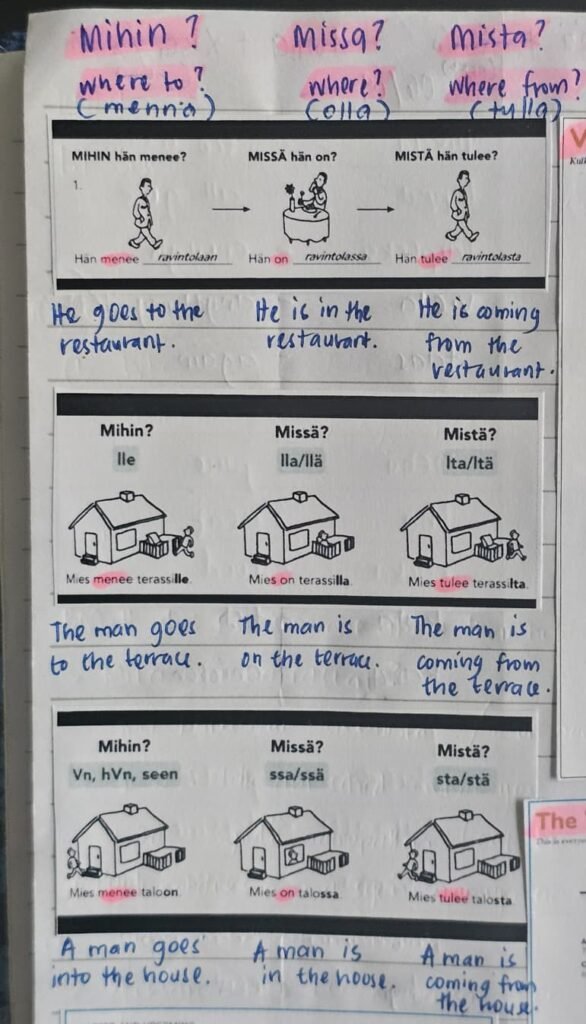
But Finnish frequently expresses those relationships by changing the ending of the word itself.
The Research Institute for the Languages of Finland explains that Finnish commonly expresses grammatical relationships by attaching endings and other elements to word stems. Finnish traditionally has 15 grammatical cases.
So instead of learning only one word…
I had to learn what happened to that word depending on what I wanted to say.
Take:
talo – house
Then suddenly:
talossa – in the house
talosta – from the house
taloon – into/to the house
Same house.
Different endings.
Different meanings.
And when I was still a beginner?
I definitely mixed them up.
😂
Sometimes I knew the word I wanted.
I simply couldn’t remember which ending belonged to the sentence.
3. Memorizing the Word Wasn’t Enough
This was one of my biggest discoveries.
With Finnish, I couldn’t always say:
Great! I memorized this word. I’m done.
Nope.
😂
Because then that word could appear tomorrow looking slightly different.
There are singular forms.
Plural forms.
Partitive forms.
Genitive forms.
Location cases.
Verb conjugations.
Conditional forms.
And many more things I hadn’t even heard of when I started.
For me, the hardest part wasn’t simply memorizing Finnish words.
It was learning how those words kept changing depending on what I wanted to say.
I could memorize one word today…
then see it the following day with a different ending and wonder:
Wait. Have I ever seen this word before?!
😂
That also made sentence construction difficult.
Before opening my mouth, my brain sometimes had to think about:
What word do I need?
What form?
What ending?
Is this singular or plural?
Do I need partitive?
Where is this happening?
Where is it coming from?
Where is it going?
And meanwhile, the person standing in front of me was waiting for an answer.
😅
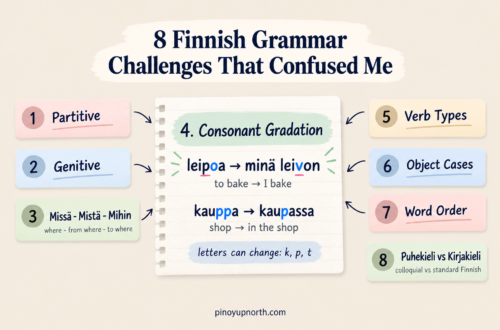
4. Then Came Consonant Gradation
And just when I thought changing endings was enough…
some letters inside the word started changing too.
😂
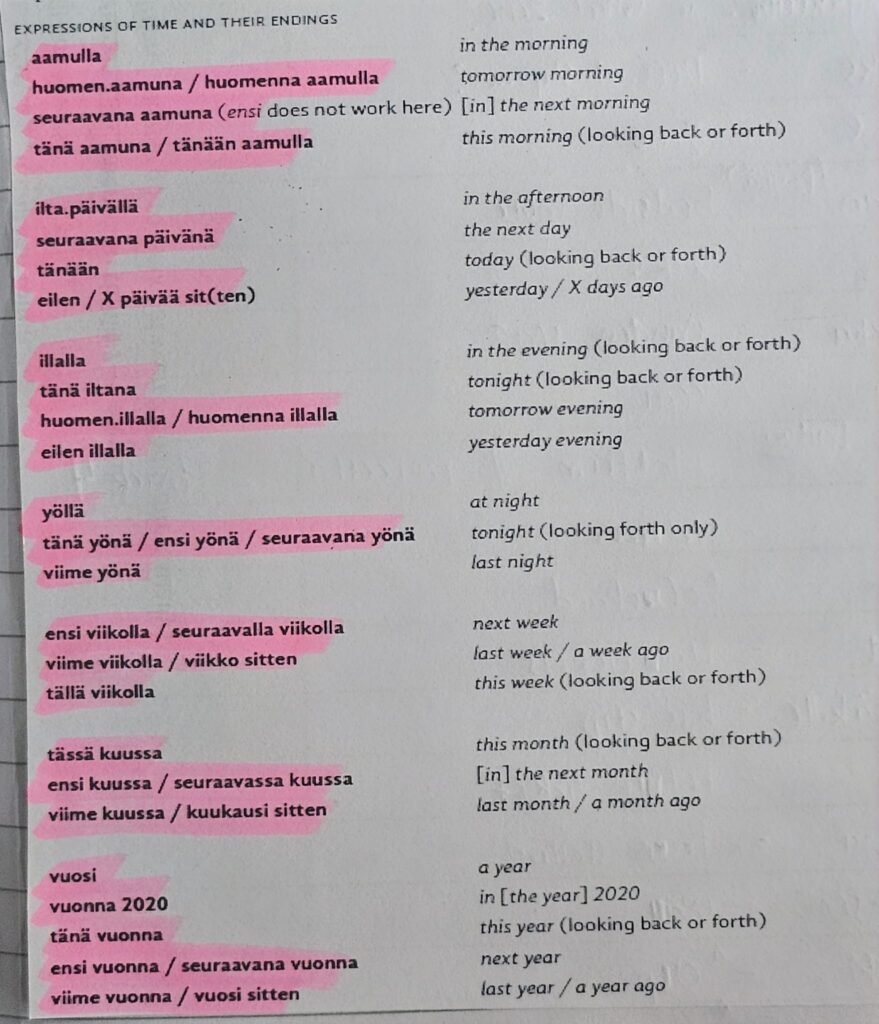
Finnish has a grammatical phenomenon called consonant gradation, or astevaihtelu. In Finnish courses, it is also commonly called KPT-vaihtelu because the changes involve certain patterns with k, p, and t. Words can alternate between stronger and weaker forms when they are inflected.
For example:
| Basic form | Changed form |
|---|---|
| pankki | pankissa |
| kauppa | kaupassa |
| pöytä | pöydällä |
| silta | sillalla |
| apu | avulla |
And verbs could do it too.
One example I remember very well:
leipoa – to bake
But:
minä leivon – I bake
Not:
minä leipon
And yes…
I have definitely said minä leipon before. 😂
When you’re speaking in real time, sometimes your brain knows there is a KPT rule somewhere…
but your mouth says:
We don’t have time for that today.
😂
The sentence comes out first, and only afterward you realize:
“Oh. That consonant was supposed to change.”

5. The Finnish I Studied Wasn’t Always the Finnish I Heard
This was probably one of the biggest surprises after arriving in Finland.
I had spent months studying things like:
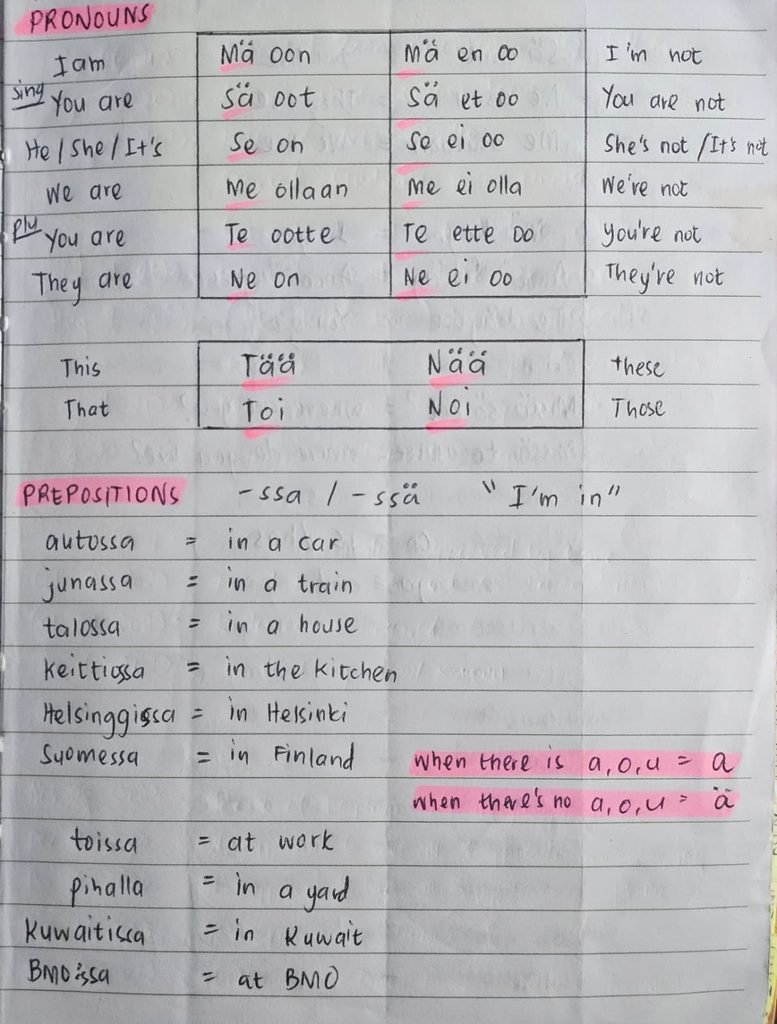
Minä olen.
Sinä olet.
Minulla on.
Then I arrived and started hearing:
Mä oon.
Sä oot.
Mulla on.
And my brain was like:
Excuse me? Where were THESE in my reviewer?
😂
Of course, what I had studied was extremely important.
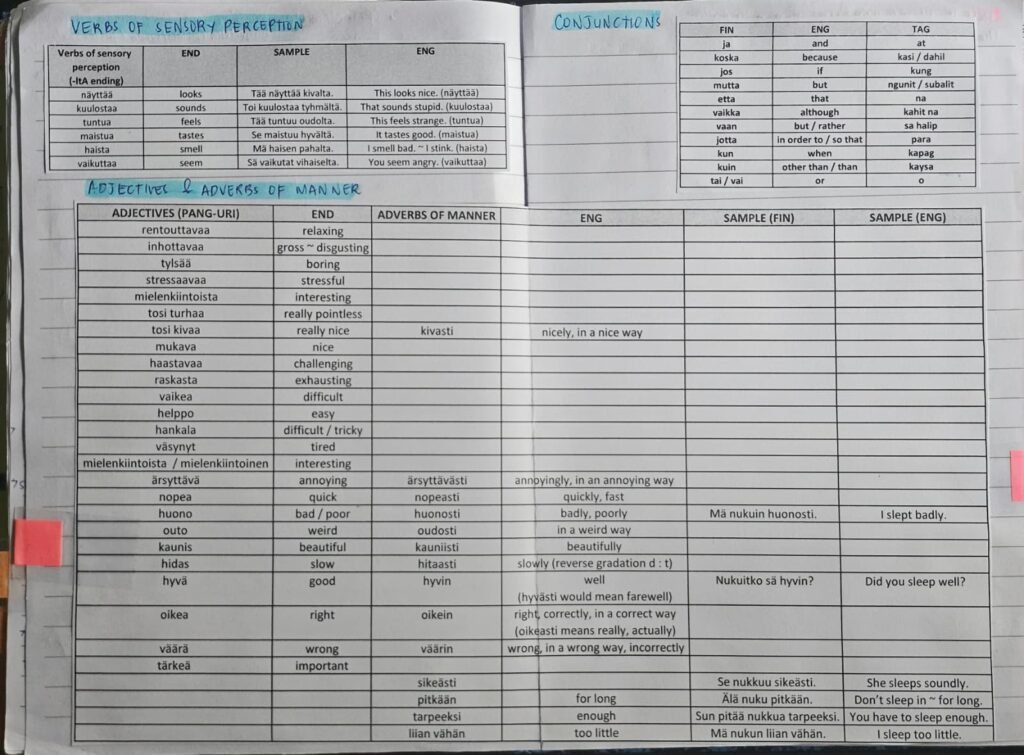
But I had learned much more standard Finnish, while daily conversations introduced me to puhekieli, or colloquial/spoken Finnish.
This was challenging because sometimes it felt as though I had started learning Finnish…
and then discovered another Finnish after arriving.
😅
I think even now my Finnish tends to lean more toward the formal side because so much of what I learned first came from lessons and written material.
Sometimes I say something and realize:
That probably sounded much more formal than I intended.
😂
This deserves its own future post too, because kirjakieli vs. puhekieli has been a whole experience for me.
6. One Extra Letter Can Change the Meaning
This one really tested my ears.
In Finnish, the difference between a short and long sound matters.
A single vowel isn’t always the same as a double vowel.
A single consonant isn’t always the same as a double consonant.
And sometimes that tiny difference completely changes the word.
Some examples:
tuli – fire
tuuli – wind
tulli – customs
Then:
tapan – I kill
tapaan – I meet
And:
muta – mud
mutta – but
muuttaa – to move
You can imagine being a beginner and thinking:
It sounded almost the same!
😂
But to a Finnish speaker, they are different words.
I had to train myself not only to see the extra letter but also to actually hear and pronounce the difference.
At normal conversational speed, that could be difficult.
Sometimes one little vowel felt capable of changing the entire direction of my sentence.
😅
Learning Finnish: The Beginning of My Language Journey
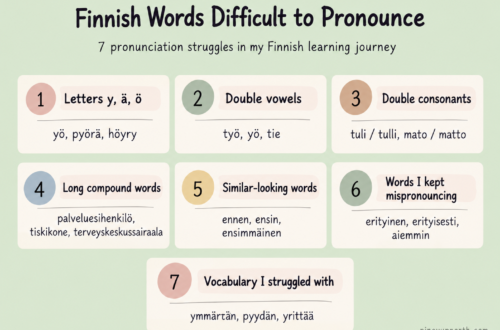
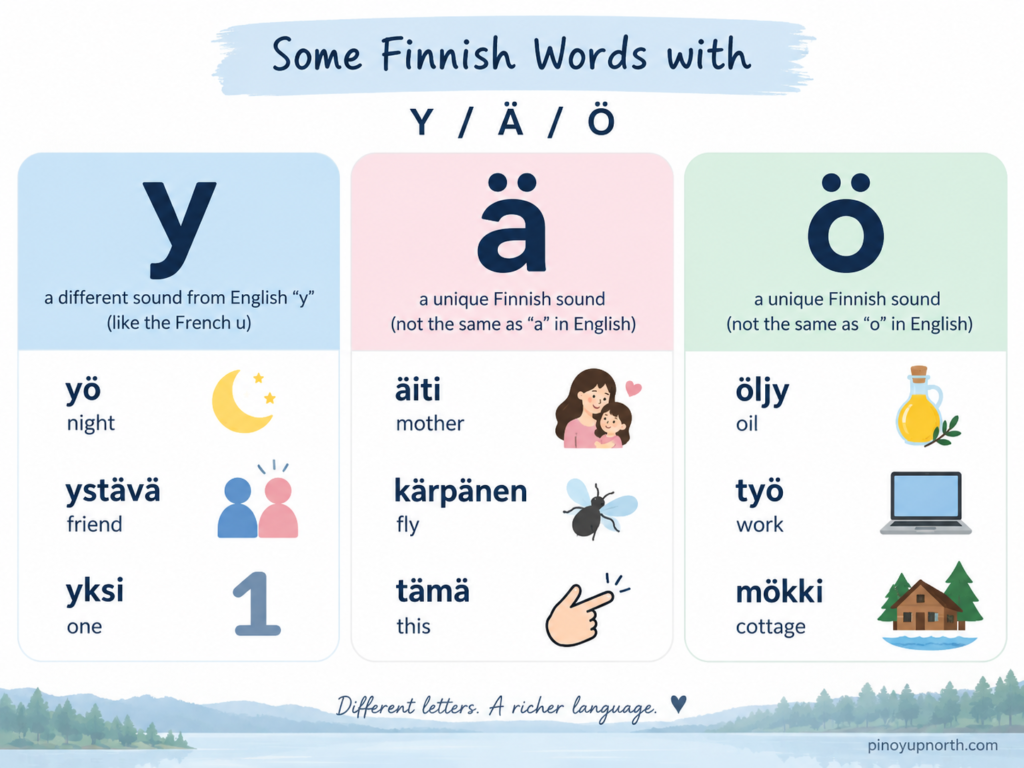
7. Then There Were Y, Ä and Ö
The Finnish alphabet looked mostly familiar to me.
But some of the sounds were definitely not.
Especially:
y
ä
ö
These were not sounds I had naturally trained myself to produce while growing up speaking Tagalog and English.
Even listening to the difference could be difficult at first.
Then I had to make my own mouth produce the sound properly.
Even after living in Finland for more than two years, there are still moments when I’m speaking quickly and don’t pronounce everything as carefully as I probably should.
Sometimes my mouth simply chooses the easier route.
😂
8. Finnish Words Could Become VERY Long
Then we have the words I lovingly call:
The tongue twisters.
😂
Finnish can build words by combining other words and adding endings, so sometimes a word becomes intimidating before you’ve even tried to pronounce it.
For example:
oleskelulupahakemus – residence permit application
sosiaalityöntekijä – social worker
apulaisesihenkilö – assistant/deputy supervisor
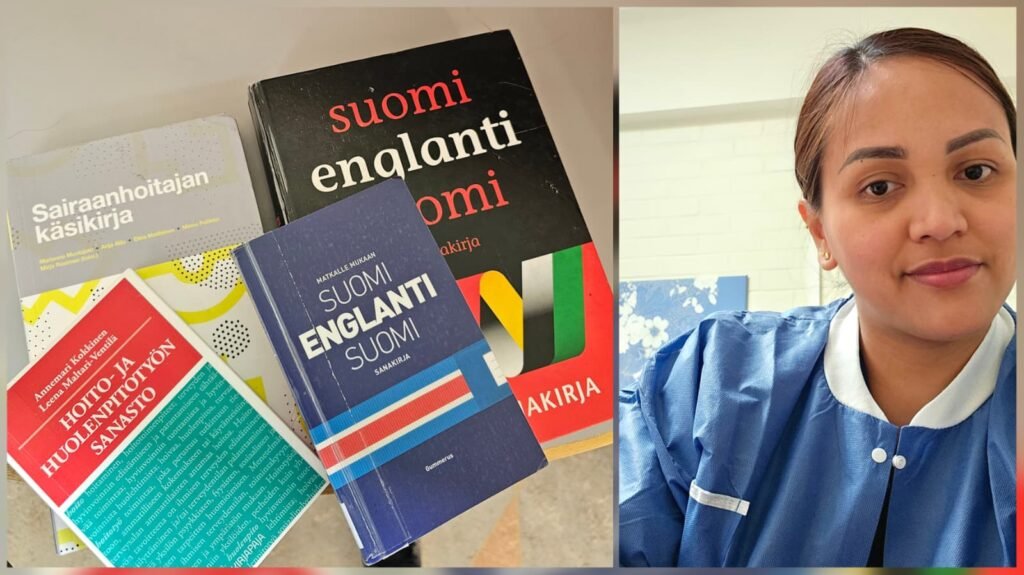
Then, when I started studying toward becoming a sairaanhoitaja, I encountered even more healthcare vocabulary.
Words like:
sepelvaltimotauti – coronary artery disease
verenpainetauti – hypertension
keuhkoputkentulehdus – bronchitis
keuhkoahtaumatauti – COPD
aivoverenkiertohäiriö – cerebrovascular disorder
pidätyskyvyttömyys – incontinence
And then there are terms made from several words:
kilpirauhasen vajaatoiminta – hypothyroidism
eturauhasen hyvänlaatuinen liikakasvu – benign prostatic hyperplasia
Terveyskirjasto, for example, uses kilpirauhasen vajaatoiminta (hypotyreoosi) as the Finnish medical term for hypothyroidism.
English:
hypothyroidism
Finnish:
kilpirauhasen vajaatoiminta
My tongue:
Can we discuss this tomorrow?
😂
And imagine trying to remember these while also learning nursing concepts at the same time.
Sometimes learning the disease was easier than learning how to pronounce its Finnish name.

9. Reading Was Easier Than Listening
When I read Finnish, I have time.
I can look at the word.
Read it again.
Break it into pieces.
Look something up.
Think about the ending.
Try to understand the whole sentence.
But when somebody is speaking to me?
There is no pause button.
😂
This became very obvious after moving to Finland.
Finnish people naturally speak Finnish at their normal speed.
And why wouldn’t they?
They’re talking in their own language.
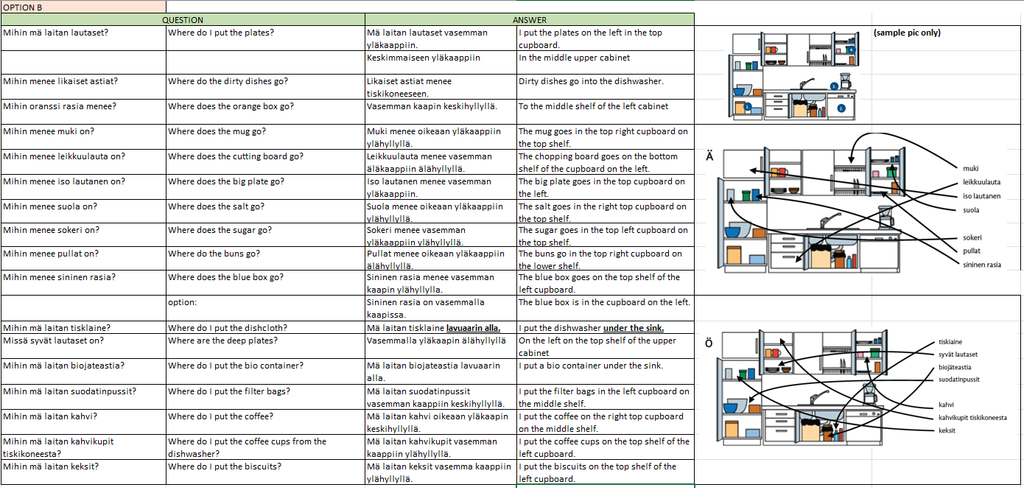
Sometimes someone would ask me a simple question.
I understood it.
I answered.
Then perhaps they realized:
Oh! She understands Finnish!
And suddenly came…
a much longer Finnish sentence.
😂
And I’m standing there thinking:
Wait! I wasn’t ready for Level 2 yet!
I say this with affection because the people I’ve met here have generally been kind and patient with me.
But listening to natural conversation was a completely different skill from reading a carefully written sentence in my reviewer.
Words connected together.
Puhekieli appeared.
Some words were shortened.
And my brain was trying to catch one familiar word somewhere in the middle.
10. My Brain Was Translating Everything First
This one still happens sometimes.
Someone speaks Finnish.
My ears receive Finnish.
Then my brain says:
Okay. Translate that into English.
Then:
Think of the answer in English.
Then:
Translate the answer into Finnish.
Then:
Check the grammar.
Then:
Say it.
😂
By the time my brain finishes the process, everyone else may already be halfway through the next conversation.
I used to joke that my brain transmitted information to my tongue too slowly.
The frustrating part was that sometimes I understood the question.
I already knew what I wanted to say.
I simply couldn’t get the Finnish sentence out quickly enough.
With more practice, that translation process slowly becomes shorter.
Sometimes now I understand something directly in Finnish without consciously translating every word first.
And whenever that happens, I think:
Progress!
😄
11. Fear of Making Mistakes Made Everything Harder
This wasn’t really a Finnish grammar problem.
It was a confidence problem.
And I think this slowed me down more than I realized.
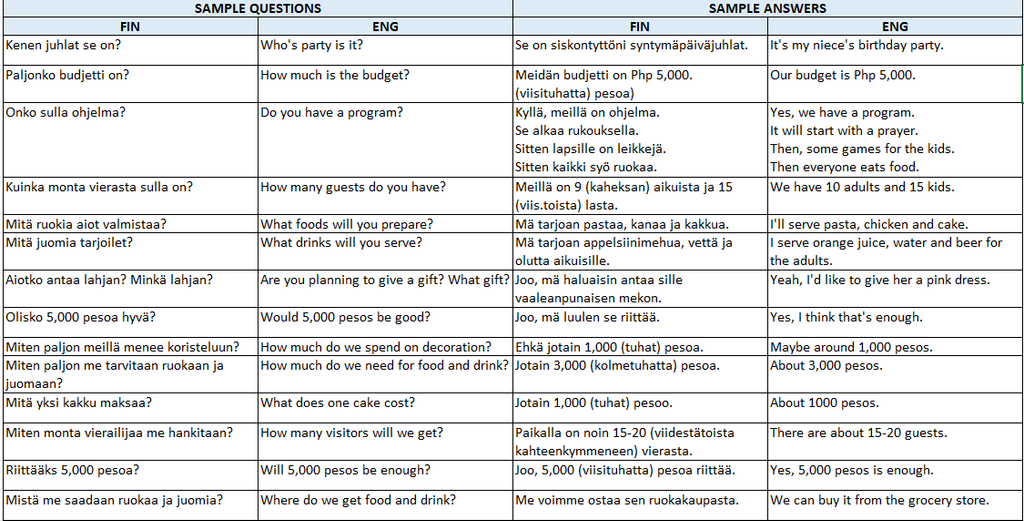
I was afraid of using:
the wrong word,
the wrong ending,
the wrong grammar,
or the wrong pronunciation.
Talking one-on-one already made me conscious of my mistakes.
Talking in a group?
Even more.
Sometimes I knew what I wanted to say, but I would hesitate so much that I started stuttering.
And once I became nervous, even the Finnish words I did know disappeared.
😅
Eventually I had to accept something:
I cannot learn to speak Finnish without speaking imperfect Finnish first.
There was no shortcut.
If I waited until every sentence was perfect before opening my mouth, I would probably still be waiting.
This is why my little motto became:
Speak. Practice. Repeat.
Mistakes aren’t proof that I’m failing to learn Finnish.
They’re proof that I’m actually using it.

12. Sometimes Finnish Simply Couldn’t Be Translated Word for Word
This was another thing I had to get used to.
At the beginning, I often wanted to take the English or Tagalog sentence inside my head and translate it directly into Finnish.
But languages don’t always work that way.
Sometimes you have to understand the Finnish structure rather than translating every word separately.
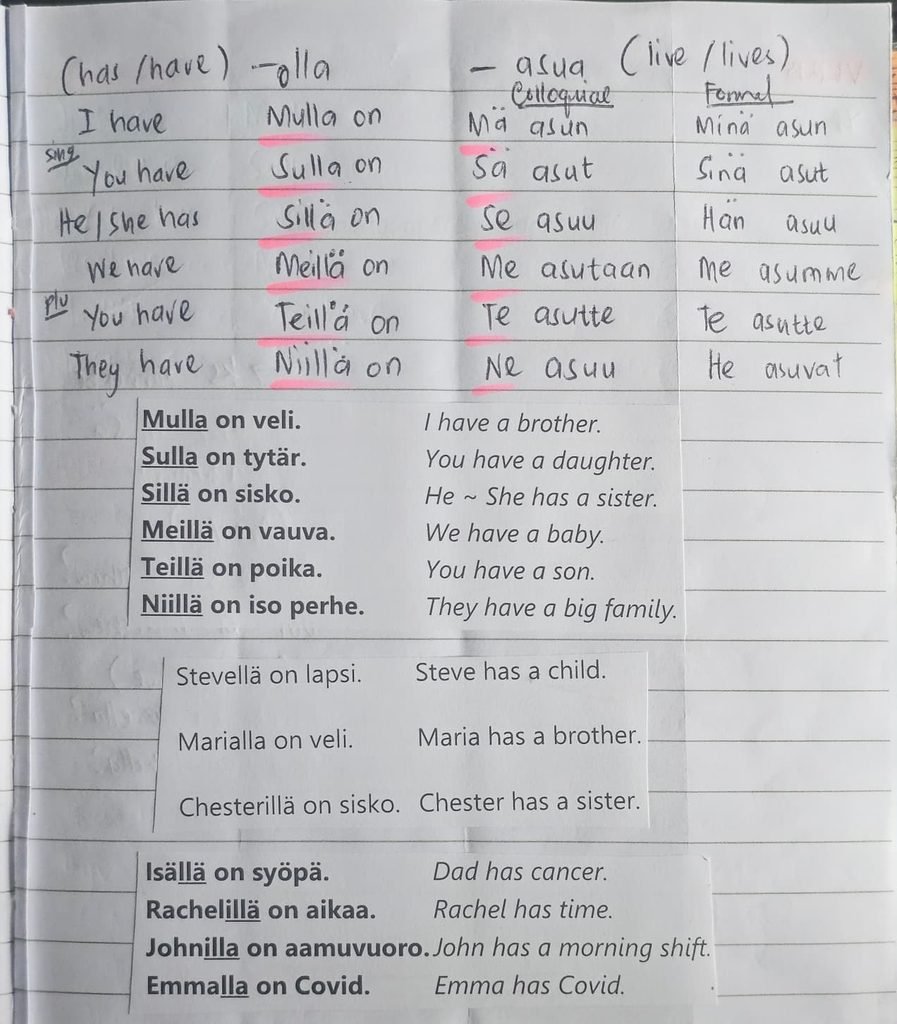
And then there’s my favorite family:
😂
Minä olen – I am
Minulla on – I have
Minulle – to/for me
Minulta – from me
Minusta – from/about me, or in my opinion depending on context
Minussa – in me
At some point I really wanted to ask:
Why does minä have so many relatives?!
😂
Take:
Minulla on koira.
In English, we simply say:
I have a dog.
But Finnish expresses possession using minulla on.
Or:
Minulla on kylmä.
The natural English meaning is:
I’m cold.
These were the kinds of structures I couldn’t always understand by translating each word literally.
Eventually, I had to stop asking:
What is the exact English translation of every piece?
and start learning:
This is simply how Finnish expresses this idea.
That change in thinking helped a lot.
But getting there took time.
So What Was the Hardest Part?
If I had to choose only one thing, I think it would be this:
Finnish words didn’t stay still.
😂
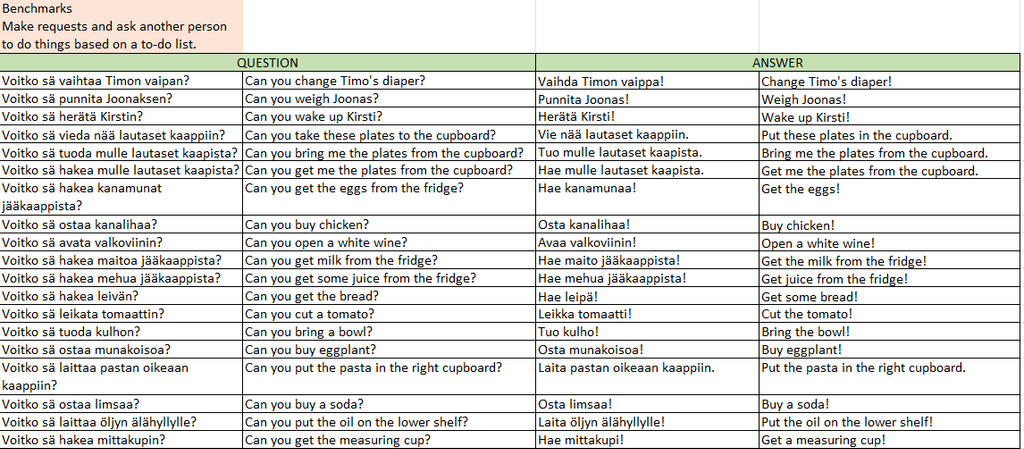
I could memorize the dictionary form, but then the endings changed.
Sometimes consonants changed.
The sentence required a particular case.
Spoken Finnish shortened the form.
Pronunciation could change the meaning.
And suddenly the word I thought I knew looked completely different.
For me, learning Finnish wasn’t simply:
Finnish word = English word
It required me to slowly learn another way of building and understanding sentences.
Growing up with Tagalog and English had already made me comfortable with the idea that different languages work differently.
But Finnish pushed me even further.
It wasn’t only my vocabulary that needed training.
It was:
my ears, my tongue, my memory, my confidence, and even the way my brain formed a sentence.
No wonder I found it difficult.
😂
Difficult Doesn’t Mean Impossible
This is probably the most important thing I’ve learned.
Finnish was difficult for me.
Honestly, it still is sometimes.
There are still conversations when I don’t understand everything.
There are still words I haven’t seen before.
There are still grammar rules I forget.
There are still moments when I say something and immediately realize:
That was definitely not correct Finnish.
😂
But difficult and impossible are not the same thing.
I know more Finnish today than I knew in 2023.
And that’s enough proof for me.
The beginner who once struggled with:
minä olen
eventually became someone who can live, work, study, ask questions, have conversations, and manage everyday situations in Finnish.
Not perfectly.
But much better than before.
And there is still plenty of room to improve.
Follow My Finnish Language Journey
This article is part of my Finnish Language Journey series, where I share my personal experience learning Finnish before and after moving to Finland.
Main Article – Learning Finnish: The Beginning of My Language Journey
Part 5A – How I Started Learning Finnish While Working Full-Time in Dubai
Part 5B – 12 Reasons Why Learning Finnish Was So Difficult for Me
Part 5C – 8 Finnish Grammar Challenges That Still Confuse Me
Part 5D – Finnish Words I Still Struggle to Pronounce
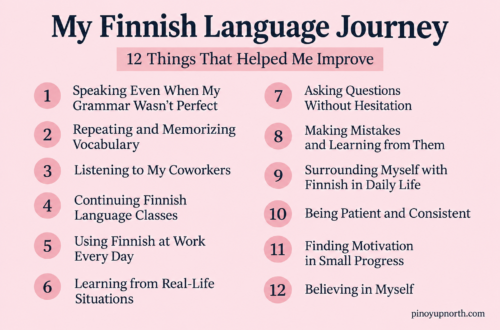
Part 5E – 12 Things That Helped Me Improve My Finnish
Final Thoughts
When I first started learning Finnish, there were so many moments when I thought:
Why does this have to be so complicated?
😂
Why does the word change?
Why did that k disappear?
Why is there another ending?
Why does one extra vowel completely change the meaning?
Why did I study minä olen only to arrive in Finland and hear mä oon?
And most importantly…
Why does minä have so many relatives?
😂
Looking back now, though, I realize that those difficult parts were also the things slowly teaching me how the language works.
I didn’t learn everything at once.
I still haven’t.
But the things that once looked completely impossible eventually started becoming familiar.
Talossa. Talosta. Taloon.
Words I once had to consciously analyze eventually became words I could understand without stopping to translate every part.
And that, for me, is progress.
Learning Finnish has required patience.
It has tested my confidence.
It has forced me to speak even when I knew my sentence might be wrong.
And it has reminded me many times that becoming good at something doesn’t happen simply because we want it badly enough.
We still have to practice.
Again.
And again.
And again.
So yes…
Finnish was difficult for me.
Sometimes it still is.
But I don’t regret learning it.
Because every difficult word, every wrong ending, every awkward conversation, and every moment of:
“Anteeksi, voitko sanoa uudestaan?”
has brought me a little further than where I started.
And for now, that’s enough.
Speak. Practice. Repeat. ❤️


“Every mistake is proof that I was brave enough to try.”
- Pinoy Up North
“The heart of the prudent getteth knowledge; and the ear of the wise seeketh knowledge.”
- Proverbs 18:15, KJV
Learning something difficult can be frustrating because progress doesn’t always happen at the same speed as our expectations.
Sometimes we study and still forget.
Sometimes we know the answer but become too nervous to say it.
Sometimes we repeat the same mistake even after we thought we had already learned the rule.
But perhaps learning isn’t about never making the same mistake again.
Maybe it’s about noticing a little more each time, understanding a little more each time, and finding the courage to keep trying.
Finnish didn’t become easier for me overnight.
I simply became more willing to keep learning it.
And sometimes that is how progress begins.
One mistake.
One correction.
One conversation.
One word at a time. ❤️
Video Source: Silkkitie
Sources
- Institute for the Languages of Finland (Kotus) – Finnish language: Finnish grammatical relations are commonly expressed through endings attached to word stems, and Finnish traditionally has 15 grammatical cases.
- Kielibuusti – Pronouncing Short and Long Sounds: Finnish distinguishes short and long vowels and consonants, and sound length can change meaning.
- Kielibuusti – Colloquial vs. Standard Finnish: Examples of how everyday spoken Finnish differs from standard Finnish.
- Uusi kielemme – Consonant Gradation: Explanation and examples of astevaihtelu / KPT-vaihtelu. Kielibuusti also lists Uusi kielemme among Finnish-language learning resources.
- Terveyskirjasto – Finnish medical terminology: Used to double-check examples such as kilpirauhasen vajaatoiminta (hypotyreoosi) and sepelvaltimotauti.
To summarize… 😊